|
|
|
|
|
|
David Lynch
> Brooks, Lynch and subtext in MD
|
|
New Topic |
Post Reply
|
<< |
1 |
>>
| 1. Monday, September 11, 2006 6:57 PM |
| Deep Thought |
Brooks, Lynch and subtext in MD |
Member Since
12/18/2005
Posts:114
View Profile
Send PM
|
In the INLAND EMPIRE thread, Booth "claims" to not like Spaceballs. Well, it is true that Spaceballs is a difficult film, but what would you expect from Lynch's mentor Brooks? Once you see past the surface "comedy" you can catch a glimpes of Lynch's roots. For instance: "The Room Above the Convenience Store," which Brooks had dubbed "The Package Store Below the Belt." Different name, same place.  
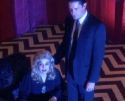
Anyway, what led me to post this was Booths critisims of MD - not my favorite Lynch movie but for different reasons. To me MD lacks subtext. As Booth says it is very clever, but the clues are practially labeled as such, and we have a feeling that we can fit them all into one simple narative (not straighforward, but simple). With Lynch's best, TP, BV, SS, the "clues" often breeze by without us noticing, and if we do see them, we have trouble determining what "puzzle" they're a part of. For instance, while the shot above is rich with the same overt symolosm as a scene from MD, we can't fit the bashful Giant into a simple narrative like we might the Bum. The giant is more of a "path" while the Bum is a "destination." Even though they may represent the same type of idea, one flows by smoothly, and the other stands there like a signpost. But then again, I like Diane Keaton's episode . . . Uhg. What did I do to the formatting?
|
| 2. Monday, September 11, 2006 7:19 PM |
| Booth |
RE: Brooks, Lynch and subtext in MD |
Member Since
8/20/2006
Posts:4388
View Profile
Send PM
|
Exhumed from the create-a-caption graveyard.

And I agree with what you said about MD.
|
| 3. Monday, September 11, 2006 7:21 PM |
| Deep Thought |
RE: Brooks, Lynch and subtext in MD |
Member Since
12/18/2005
Posts:114
View Profile
Send PM
|
Ooof. I guess this is well-trodden upon area.
|
| 4. Monday, September 11, 2006 9:50 PM |
| Laura was a patient of mine |
RE: Brooks, Lynch and subtext in MD |
Member Since
3/15/2006
Posts:690
View Profile
Send PM
|
I feel like Lynch finally achieved in Mulholland what he was trying to do in Twin Peaks. I love Twin Peaks (probably more than Mulholland actually) for my own reasons, but really I feel Mulholland is a far more complete narrative. The way things actually symbolize something tangible instead of some abstract idea that not even Lynch understands makes the movie more coherent and important a statement than anything Lynch has done since Blue Velvet (the way I see it). I wouldn't like the film as much if it were more straightforward, but I prefer comprehensible, interesting, statements (in a unique and interesting style), to total abstraction. Really I feel that abstraction is easier to do, whereas making most things in a movie as strange as Mulholland Dr. add up to make a (or several) point(s) (and a good story) is much more difficult, especially for someone like Lynch. Also I am confused as to what you mean by subtext. Using it in the normal sense I would say that Mulholland Dr. has more subtext than almost any other Lynch film. PS: Also how is the Giant's function remotely similar to the Bum's? I am at a loss there.
That god damn trailer's more popular than Uncle's Day in a whorehouse!
|
| 5. Tuesday, September 12, 2006 6:52 AM |
| smokedchezpig |
RE: Brooks, Lynch and subtext in MD |
Member Since
12/19/2005
Posts:5246
View Profile
Send PM
|
Okay, I like Mulholland Drive a lot. Sorry, Booth. Hey, it's good to see Deep Thought pop his head back up. How's it going, dude. When watching MD and comparing it to previous works by David Lynch, I always keep one fact in perspective. This film is a redux of a failed TV pilot, which takes the original story in a whole other direction. He filmed new material in an attempt to make the story more "cohesive" and complete his revisioning of the film and the new story he was telling. I think this might be the reason the "clues" are less subtle and although there are a few small areas I have problems with, meaning some of the connections that he made between you know what and you know what (trying to avoid spoilers here)are a little strained, but overall, the look of the film and the mood that it gives off I found very enjoyable and think it was one of Lynch's better works. One last thing, Inland Empire is possibly what Mulholland Drive would have been like if it had not be redone from a TV pilot script and done as a feature film from the get go. Just a thought.
"Every day holds a new beginning and every hour holds the promise of an Invitation to Love."
|
| 6. Tuesday, September 12, 2006 8:02 AM |
| Booth |
RE: Brooks, Lynch and subtext in MD |
Member Since
8/20/2006
Posts:4388
View Profile
Send PM
|
| QUOTE:Okay, I like Mulholland Drive a lot. Sorry, Booth. |
Like what you like, man. I don't care.
|
| 7. Tuesday, September 12, 2006 6:17 PM |
| Deep Thought |
RE: Brooks, Lynch and subtext in MD |
Member Since
12/18/2005
Posts:114
View Profile
Send PM
|
Hey there Smokey! Hope all is well and the forum is calm - although Booth's reply to you makes me think that there is some electricity in the air! I've been well, thanks. LWAPOM, "The way things actually symbolize something tangible instead of some abstract idea that not even Lynch understands" I have faith that Lynch understands his ideas perfectly. Subtext. Does MD have any? Each scene is meant to "fit" into the story. I guess you could say it is all subtext then. Traditional subtext will call up an idea unrelated to the immediate storyline while existing within it. In BV Jeffrey hides in the closet spying on some kinky sex. In SS Alvin' brakes fail. In TP Laura witnesses a drug deal gone bad. Did any of these scenes cause you wonder exactly how they fit into the puzzle? Did you even wonder if there was a puzzle they fit into? If Lynch did his job then you didn't, at least while you were viewing them, because they were part of the "story." Only later, and usually after reflection, did you start to understand another meaning to the scene. Are there scenes in MD that have a meaning "above" their primary relationship to the Diane "evil innocence" storyline? If there are I would be pleased. The Giant and the Bum are both used as representations of mental processes (or spirits depending on your vernacular). That's all I meant, not that they represent the same ones.
|
| 8. Tuesday, September 12, 2006 7:11 PM |
| Laura was a patient of mine |
RE: Brooks, Lynch and subtext in MD |
Member Since
3/15/2006
Posts:690
View Profile
Send PM
|
I think that Jeffrey's spying in the closet in Blue Velvet reveals a lot about Jeffrey's character and his explains his actions later in the movie. It is also an introduction to Frank and explains his relationship with Dorothy in one of the most bizarre and disturbing scenes in cinematic history. I think this is the very core of the movie... everything else comes from it. It fits in with the rest of the movie perfectly. Also I had to think for a while after Mulholland to see how many things fit in place. And yes Mulholland has many themes besides Diane's "evil innocence". It is a commentary on the nature of dreams and movies (and how they are similar) as well as the nature of good and evil within one self. It is also an interesting character study and a moving, tragic story. I feel like it is loaded with subtext. Also Lynch has made many statements about how one day he'll realize what a certain thing in his movies means to him... it doesn't sound like he understands them perfectly to me.
That god damn trailer's more popular than Uncle's Day in a whorehouse!
|
| 9. Tuesday, September 12, 2006 7:17 PM |
| Booth |
RE: Brooks, Lynch and subtext in MD |
Member Since
8/20/2006
Posts:4388
View Profile
Send PM
|
Heh heh, the dirty bum behind Winkie's. Now I get it. 
|
| 10. Wednesday, September 13, 2006 4:35 AM |
| Deep Thought |
RE: Brooks, Lynch and subtext in MD |
Member Since
12/18/2005
Posts:114
View Profile
Send PM
|
Now that's subtext! Brooks' influence runs deep indeed.
|
| 11. Wednesday, September 13, 2006 6:15 PM |
| Deep Thought |
RE: Brooks, Lynch and subtext in MD |
Member Since
12/18/2005
Posts:114
View Profile
Send PM
|
| "I think that Jeffrey's spying in the closet in Blue Velvet reveals a lot about Jeffrey's character and his explains his actions later in the movie. It is also an introduction to Frank and explains his relationship with Dorothy in one of the most bizarre and disturbing scenes in cinematic history. I think this is the very core of the movie... everything else comes from it" |
Right, it does accomplish all those things, but it also has a Freudian subtext that doesn't relate to the "storyline." There are certain things done and said in that scene that exist coherently within the movie at a level separate from the plot. I'm not one to spoil your take on the movie with mine (at least not in this thread!), so take the movie "Alien." There is a coherent subtext in that movie that doesn't directly relate to the plot: the anxiety of giving birth and of motherhood. The subtext is rich in that movie, but to skim the surface - the ship's computer is "mother," the android has milk instead of blood, the first alien ship encountered looks like a woman in stirrups at the ObGyn and the astronauts walk into the you-know-what, the (somewhat more obvious) alien being "born" from a human belly. That's what I mean by subtext. That's what I mean by MD being "all subtext." The plot is introduced through the subtext. Yes it's very clever, but I feel that BV is even more clever by expressing the same types of powerful ideas in a way that doesn't obligate you to look for them. My own personal experience of art is that the less one has to analyze (and consequently verbalize), the more directly it communicates with you. Just my opinion, of course. :-)
|
| 12. Wednesday, September 13, 2006 6:24 PM |
| Rabid Muse |
RE: Brooks, Lynch and subtext in MD |
Member Since
6/6/2006
Posts:105
View Profile
Send PM
|
| QUOTE: , but it also has a Freudian subtext ...That's what I mean by MD being "all subtext." |
I would be really interested in what you have to say about the Freudian MD Experiment posts. Realizing that it is a theory in progress, of course.

"Every day is a Saturday morning." -DL
|
| 13. Wednesday, September 13, 2006 6:29 PM |
| Laura was a patient of mine |
RE: Brooks, Lynch and subtext in MD |
Member Since
3/15/2006
Posts:690
View Profile
Send PM
|
I see more of what you're saying now... and I'll admit that MD probably does have less underlying themes than most of Lynch's work... I think this makes it more focused and important (like Blue Velvet). But there's still the matter of how it explores the similarity between dreaming and moviemaking. It doesn't "force" you to think about that, and it has little to do with the main plotline of the movie. It certainly is neither "all subtext" or "no subtext"... whichever one you're saying it is...
That god damn trailer's more popular than Uncle's Day in a whorehouse!
|
| 14. Wednesday, September 13, 2006 6:39 PM |
| Deep Thought |
RE: Brooks, Lynch and subtext in MD |
Member Since
12/18/2005
Posts:114
View Profile
Send PM
|
Moviemaking and dreaming. I have to confess that's not something I've ever thought about or noticed in the movie. Is there a discussion of it somewhere? As far as Freud in MD, I did see that thread and it sounds very good. I had some quite long posts on the subject some time back that dissapeared in to the ether of the various incarnations of this BB, I suppose. They delt with TP, but MD takes place in the same universe, IMO.
|
| 15. Wednesday, September 13, 2006 9:51 PM |
| Laura was a patient of mine |
RE: Brooks, Lynch and subtext in MD |
Member Since
3/15/2006
Posts:690
View Profile
Send PM
|
Sadly, the statements that Mulholland Dr. makes about filmaking go largely unexplored by it's fanbase. I have not seen this subject explored here or anywhere else... I assumed because it was so elementary to the film and I had done nothing remarkable in uncovering it; but it seems that many merely missed it. They seem to be so intent on making everything in the plot fit that they don't pay attention to what Lynch is saying. I must confess I didn't see it until thinking about it a few days. My dad had the theory that parts of it were a movie being made (which is interesting, but, sadly, impossible to puzzle out). I got a similar feeling though, and I wondered why this was. The whole first two-thirds somehow felt like a movie currently in the making... somehow more than most movies. I have no idea how Lynch did this exactly, but I have read other theories suggesting that it was actually a movie and not a dream, so he got this idea across to others as well... too bad so many missed this theme (which I think is a key part of what makes the movie great). Here you'll see my train of thought... Diane is an actress, and is involved in movie making. Her dreams are like movies (Betty says to Rita at one point "It'll be just like in the movies"). Her dream is a "recording" (as the Club Silencio scene states) of her hopes and wishes, as well as her sad reality (the body in her apartment). It is a recording of Diane's mind, as many movies (especially Lynch movies) are recordings of their creator's mind. She casts people from her life in "roles" for her dream. Another point about this: in dreams another world is created in your mind. The characters (according to MD) take on a life of their own and think their world is real. A similar thing happens to characters in movies: the audience can come to think of them as real, though they know that they are being played by actors. The Club Silencio scene (the core of this theme) is Lynch telling his viewers that the film is an illusion as well as telling Betty and Rita that their world isn't real (it was originally a closed ending for the TV pilot, it would close by Lynch (through the Silencio scene) telling his viewers that the plotlines that weren't wrapped up don't matter because it was all a illusion. People go to movies to escape from their lives for a brief time; Diane does the same. This was kind of rambling but I hope it got this idea across to you... I think the statement that Lynch makes about dreams and movies is more important to the movie than even the movie storyline... So many people seem to have missed it. This could reveal a flaw in the movie... Lynch was too opaque with this theme. There is no doubt in my mind that this was a point he was trying to make in the film. I would say thisis the subtext that you think is missing. (If you watch the movie again with this idea in mind it might convince you more... you might see a second meaning behind the film).
That god damn trailer's more popular than Uncle's Day in a whorehouse!
|
| 16. Thursday, September 14, 2006 1:26 AM |
| mr. silencio |
RE: Brooks, Lynch and subtext in MD |
Member Since
12/20/2005
Posts:1466
View Profile
Send PM
|
No, you are wrong when you say Lynch has been too opaque. That's the substance of dreams, being opaque I mean. Regarding the in depth-analysys of the movie, one can go mad on understanding every details but one time Italian contemporary writer Italo Calvino said that giving the dream explanation for a work of fiction as a novel or a film can be like having a lid for each kind of pot - meaning once you've given that work of fiction the explanation that it is a dream, you are over it and you can take a distance from it -, but when it is true that it was all about a dream you can give up being rational and seeking more and more details. You just have to surrender the fantastic power of this artwork and accept its mechanisms, and usually these mechanisms elude the concept of clearness. Then, trying to see things that should have a meaning could spoil the pleasure of something that can be defined as a reverie or even an abstraction. If you try to comment on a painting by Kandinsky you can tell everything you want about it but the chances that you are really enjoying it are few (and the chances that you aren't getting it are many). 
"Did they scoff the whole damn Smörgåsbord?" (Audrey) "Gimme a donut!" (Coop)
|
| 17. Thursday, September 14, 2006 10:40 AM |
| JVSCant |
RE: Brooks, Lynch and subtext in MD |
Member Since
12/18/2005
Posts:2870
View Profile
Send PM
|
QUOTE:Sadly, the statements that Mulholland Dr. makes about filmaking go largely unexplored by it's fanbase.
|
Lost Highway, as well... I've been threatening to write that article for about two years now.
 
|
| 18. Friday, September 15, 2006 6:42 PM |
| Deep Thought |
RE: Brooks, Lynch and subtext in MD |
Member Since
12/18/2005
Posts:114
View Profile
Send PM
|
| QUOTE:Sadly, the statements that Mulholland Dr. makes about filmaking go largely unexplored by it's fanbase. I have not seen this subject explored here or anywhere else... I assumed because it was so elementary to the film and I had done nothing remarkable in uncovering it; but it seems that many merely missed it. |
Diane is a wanabee actor. She fantisizes (dreams) that she is in a movie and relates to the language of movies. That's all I get from it. I don't see anything else to this aspect of the film, but would love to hear more.
|
| 19. Wednesday, September 20, 2006 5:56 AM |
| ThisIsTheGirl |
RE: Brooks, Lynch and subtext in MD |
Member Since
1/27/2006
Posts:373
View Profile
Send PM
|
| QUOTE:Sadly, the statements that Mulholland Dr. makes about filmaking go largely unexplored by it's fanbase. I have not seen this subject explored here or anywhere else... I assumed because it was so elementary to the film and I had done nothing remarkable in uncovering it; but it seems that many merely missed it. They seem to be so intent on making everything in the plot fit that they don't pay attention to what Lynch is saying. I must confess I didn't see it until thinking about it a few days. My dad had the theory that parts of it were a movie being made (which is interesting, but, sadly, impossible to puzzle out). I got a similar feeling though, and I wondered why this was. The whole first two-thirds somehow felt like a movie currently in the making... somehow more than most movies. I have no idea how Lynch did this exactly, but I have read other theories suggesting that it was actually a movie and not a dream, so he got this idea across to others as well... too bad so many missed this theme (which I think is a key part of what makes the movie great). Here you'll see my train of thought... Diane is an actress, and is involved in movie making. Her dreams are like movies (Betty says to Rita at one point "It'll be just like in the movies"). Her dream is a "recording" (as the Club Silencio scene states) of her hopes and wishes, as well as her sad reality (the body in her apartment). It is a recording of Diane's mind, as many movies (especially Lynch movies) are recordings of their creator's mind. She casts people from her life in "roles" for her dream. Another point about this: in dreams another world is created in your mind. The characters (according to MD) take on a life of their own and think their world is real. A similar thing happens to characters in movies: the audience can come to think of them as real, though they know that they are being played by actors. The Club Silencio scene (the core of this theme) is Lynch telling his viewers that the film is an illusion as well as telling Betty and Rita that their world isn't real (it was originally a closed ending for the TV pilot, it would close by Lynch (through the Silencio scene) telling his viewers that the plotlines that weren't wrapped up don't matter because it was all a illusion. People go to movies to escape from their lives for a brief time; Diane does the same. This was kind of rambling but I hope it got this idea across to you... I think the statement that Lynch makes about dreams and movies is more important to the movie than even the movie storyline... So many people seem to have missed it. This could reveal a flaw in the movie... Lynch was too opaque with this theme. There is no doubt in my mind that this was a point he was trying to make in the film. I would say thisis the subtext that you think is missing. (If you watch the movie again with this idea in mind it might convince you more... you might see a second meaning behind the film). |
Great post!
I totally agree, and I've certainly said similar things before, on this site and elsewhere....
Has he taken his eyes off it yet?
|
| 20. Wednesday, September 20, 2006 10:50 AM |
| mr. silencio |
RE: Brooks, Lynch and subtext in MD |
Member Since
12/20/2005
Posts:1466
View Profile
Send PM
|
Frankly, I didn't quite get the true meaning of these latest reasonings. Please, be less opaque.. At least us! 
"Did they scoff the whole damn Smörgåsbord?" (Audrey) "Gimme a donut!" (Coop)
|
| 21. Thursday, September 21, 2006 7:29 AM |
| ThisIsTheGirl |
RE: Brooks, Lynch and subtext in MD |
Member Since
1/27/2006
Posts:373
View Profile
Send PM
|
Well, I don't have the time to do the idea justice here, but it might be useful for me to quote what my girlfriend said after I first showed her MD, and we then went to a pub and chatted about it for several hours. I was saying something like "The first section of the film is like an idealised version of Betty/Diane's experiences". To which she said "ah, but is it her ideal, or Lynch's?" - in other words, is the film, up to the point when the cowboy says "time for you to wake up", Betty's fantasy, or Lynch's? After that point, is it "real", is it Betty's nightmare, or is it simply more of Lynch's own vision? In addition to all of this, I think LWAPOM is saying that parts of the movie which are ostensibly "real" might actually be scenes from some other movie. I felt this very strongly in the address book scene, which doesn't feel like a Lynch movie at all, more like a Tarantino one.....is Lynch touching upon the concept of moviemaking, and more specifically, Hollywood moviemaking, in this scene? I get the impression that INLAND EMPIRE is going to pursue this idea even further I should state at this point that I make no claim to have a definitive "interpretation" of MD or any of Lynch's works, because to do so would be [a] Arrogant, [b] wrong, and [c] completely missing the beauty of DL's style of storytelling. It would be like looking at a Hopper painting and claiming to "know" exactly what the artist was trying to say. There are multiple textures there, so there's scope for all of us to experience the narrative in our own way, in my opinion.
Has he taken his eyes off it yet?
|
|
New Topic |
Post Reply
|
Page 1 of 1 ::
<< |
1 |
>>
|
|
David Lynch
> Brooks, Lynch and subtext in MD
|
| Users viewing this Topic (0) |
| |
Powered by JorkelBB 2006 (Version 1.0b)
|
|
|